HubSpot AEO vs. Semrush AI Visibility: Which is right for your team?
If you’re comparing HubSpot AEO vs Semrush AI Visibility Toolkit, I tested both for you as a marketing and AEO practitioner myself and will share my detailed review.
本条来自 HubSpot Marketing Blog(marketing),聚焦 品牌营销、人工智能。 See exactly where your brand shows up in answer engines and take action to close AI visibility gaps.
If you’re comparing HubSpot AEO vs Semrush AI Visibility Toolkit, I tested both for you as a marketing and AEO practitioner myself and will share my detailed review
- HubSpot AEO vs. Semrush AI Visibility: Which is right for your team?
- HUBSPOT AEO TOOL
- What is AEO vs. AI visibility? (And why it matters)
- HubSpot AEO Tool
- See exactly where your brand shows up in answer engines and take action to close AI visibility gaps
If you’re comparing HubSpot AEO vs Semrush AI Visibility Toolkit, I tested both for you as a marketing and AEO practitioner myself and will share my detailed review
- Home
- Marketing
- HubSpot AEO vs. Semrush AI Visibility: Which is right for your team?
HubSpot AEO vs. Semrush AI Visibility: Which is right for your team?
HUBSPOT AEO TOOL
See exactly where your brand shows up in answer engines and take action to close AI visibility gaps.
If you’re comparing HubSpot AEO vs Semrush AI Visibility Toolkit, I tested both for you as a marketing and AEO practitioner myself and will share my detailed review.
To run the experiment, I used one of the niche websites in my portfolio (a golf website) that hasn’t yet been optimized for AI search. Below, you’ll get screenshots and information from my personal experience testing both HubSpot AEO and Semrush One (which includes Semrush’s AI Visibility features). Then, I’ll walk you through the pros and cons of both AEO tools and help you pick the best one based on your team’s needs.

But first, let me demystify AEO, GEO, and all things AI visibility so we’re working from the same definitions.
- What is AEO vs. AI visibility? (And why it matters)
- HubSpot AEO vs. Semrush AI Visibility: Core Comparison
- HubSpot AEO vs. Semrush AI Visibility: Actionability
- HubSpot AEO vs. Semrush AI Visibility: Integrations
- HubSpot AEO vs. Semrush AI Visibility for Ease of Use
- HubSpot AEO vs. Semrush AI Visibility Pricing + How to Start
- HubSpot AEO vs. Semrush AI Visibility: Which should you choose?
- Alternatives to HubSpot AEO and Semrush AI Visibility
- Frequently Asked Questions About HubSpot AEO vs. Semrush AI Visibility
What is AEO vs. AI visibility? (And why it matters)
AEO stands for answer engine optimization, and it’s the practice of creating and modifying online content so that it is more likely to be mentioned and cited by AI answer engines like ChatGPT, Claude, and Gemini. You might also hear people refer to AEO as GEO (generative engine optimization) or AI SEO, but here at HubSpot, we stick with the term AEO.
AEO matters because, as AI becomes more popular, people are turning to answer engines to do their buyer research, in addition to Google. In 2026, nearly half of U.S. adults use AI chatbots, up from one-third in 2024, according to the Pew Research Center. Further, Pew found that 60% of American adults read the AI-generated summaries at the top of search results, while only 30% say they do not. Brands that learn and leverage AEO will gain a competitive advantage.
AI visibility is an umbrella term for the metrics that measure how your brand shows up in AI search, including share of voice, sentiment, citations, and mentions. It matters because this is how marketers and SEOs track their AEO progress.
Pro tip: To get a baseline snapshot of your AI visibility, use the free AI Search Grader tool.
Prompts are to AEO what keywords are to SEO. Prompts are the phrases that users type into answer engines to get information about their query. Marketers use AEO tools like HubSpot AEO to track the prompts their brands should show up for.
Citations are the websites that the AI consulted to generate its answer. They may or may not be linked.
Coverage is shorthand for “answer engine coverage,” which refers to which LLMs the AEO tool tracks. For example, HubSpot AEO covers ChatGPT, Gemini, and Perplexity.
HubSpot AEO Tool
- Track AI mentions.
- Analyze citations
- Monitor prompts
- Benchmark competitors
HubSpot AEO vs. Semrush AI Visibility: Core Comparison
First, let me clarify the product naming and tiers, so you understand which one you need to buy. HubSpot AEO is available to purchase on its own, without another HubSpot subscription. Additionally, AEO is the name of the CRM-connected product included within Marketing Hub Professional and Enterprise.
Semrush AI Visibility Toolkit is available to purchase on its own or as an add-on to an existing Semrush subscription. Semrush SEO + AI Search is also known as Semrush One, and it’s the bundled product with SEO and AEO features.
This article (and the quick comparison table below) primarily compares HubSpot AEO and Semrush AI Visibility Toolkit (the products available for purchase on their own). But I’ll also include additional information about AEO in Marketing Hub Professional and Enterprise and Semrush One (the integrated/bundled products).
Yes, 28-day free trial. No credit card required.
No free trial for the Semrush AI Visibility Toolkit on its own. But Semrush One does offer a 7-day free trial and combines SEO with AI visibility features. Credit card is required to sign up for the free trial.
Answer Engine Coverage
ChatGPT, Gemini, Perplexity
Semrush AI Visibility Toolkit or Semrush One: ChatGPT, Google AI Overviews, Google AI Mode, Gemini, and Perplexity
Semrush for Enterprise: ChatGPT, Google AI Overviews, Google AI Mode, Gemini, Perplexity, Claude, Microsoft Copilot, Grok, DeepSeek
HubSpot AEO: 25 prompts
AEO within Marketing Hub (Pro & Enterprise): 25 and 50 prompts
Semrush AI Visibility Toolkit: 25 prompts
Semrush One Starter: 50 prompts
Brand visibility score, sentiment analysis, share of voice, citation analysis & share
Visibility score, share of voice, sentiment, topics & sources (cited pages)
Upgrade to Marketing Hub Professional or Enterprise to move from AEO insight to content creation, all in one place.
Stronger at technical optimizations than HubSpot AEO. Performs a full site audit. However, Semrush lacks a CMS or CRM, so you’re not able to publish content or get CRM-connected suggestions as with HubSpot.
Upgrade to Marketing Hub Professional or Enterprise to get AEO natively integrated with HubSpot’s marketing software and Smart CRM.
Semrush shines at third-party integrations, including WordPress, Trello, Google Docs, and Facebook
HubSpot AEO is $50/mo billed monthly.
AI Visibility Toolkit is $99/mo/domain billed monthly.
How do these tools track prompts, citations, and brand mentions?
How HubSpot AEO Tracks Prompts, Citations, and Brand Mentions
HubSpot AEO uses the official APIs of ChatGPT, Gemini, and Perplexity to run your tracked prompts daily and show you the actual AI responses.
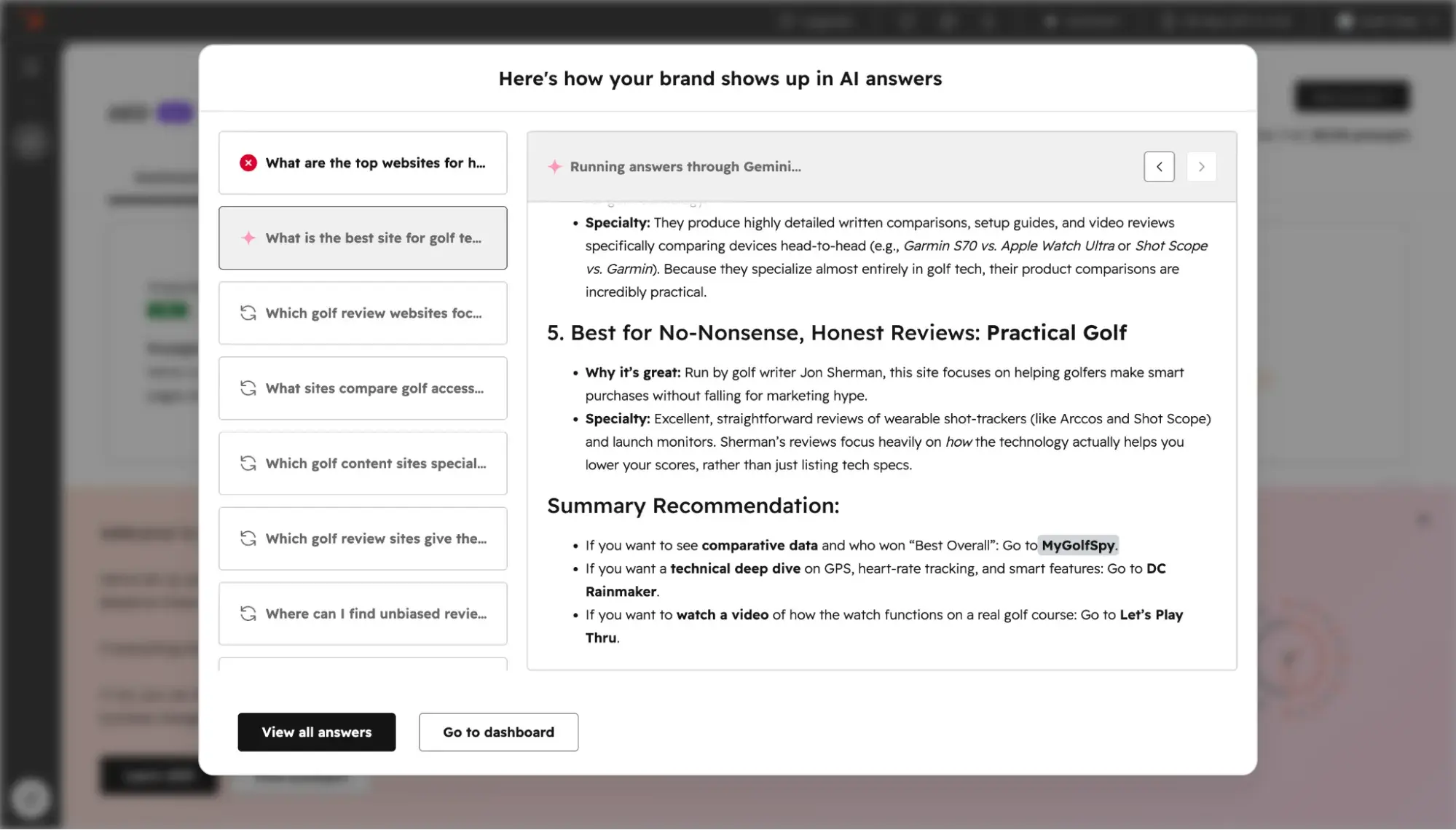
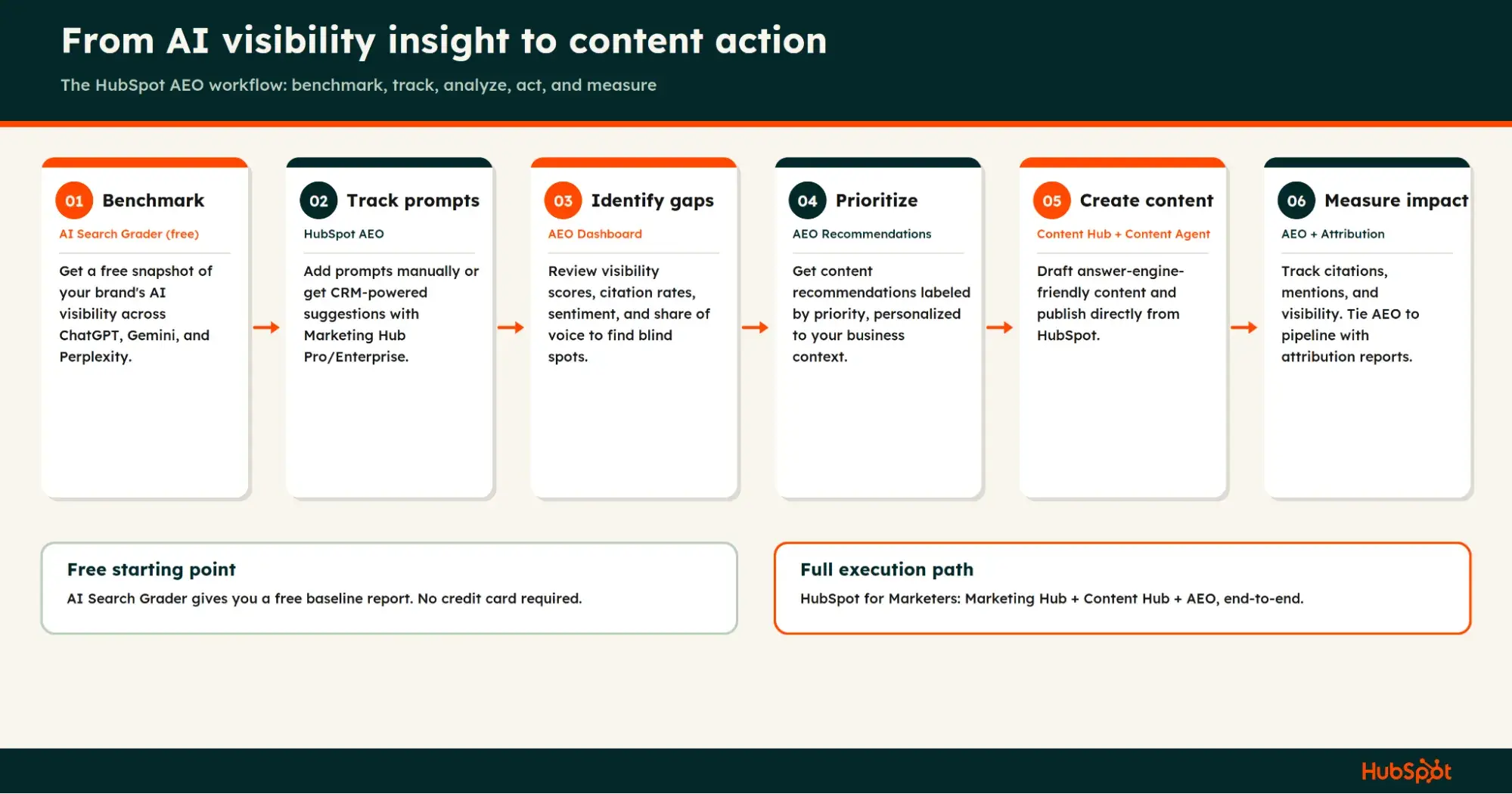
Users can manually add prompts to HubSpot AEO or get suggestions based on the company info they provide during onboarding. Or, if they’re using AEO in Marketing Hub Pro+, users can get AI-powered suggestions that draw upon context from the CRM data. The advantage of this is that the suggestions get smarter over time as the CRM learns more about your business.
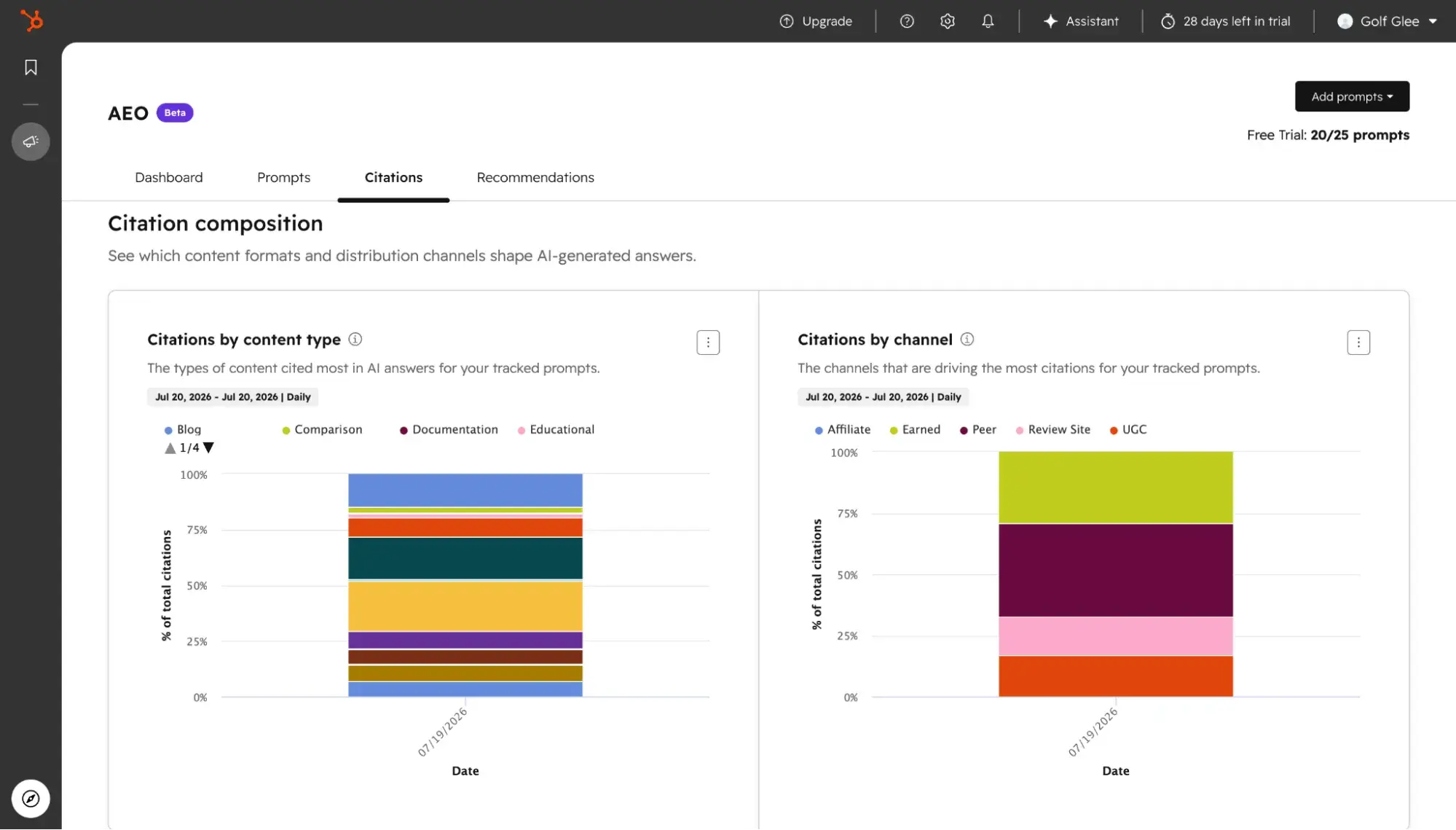
HubSpot AEO’s dashboard shows a detailed citation analysis, including owned citation rate versus competitors, citations by content type, and citations by channel.
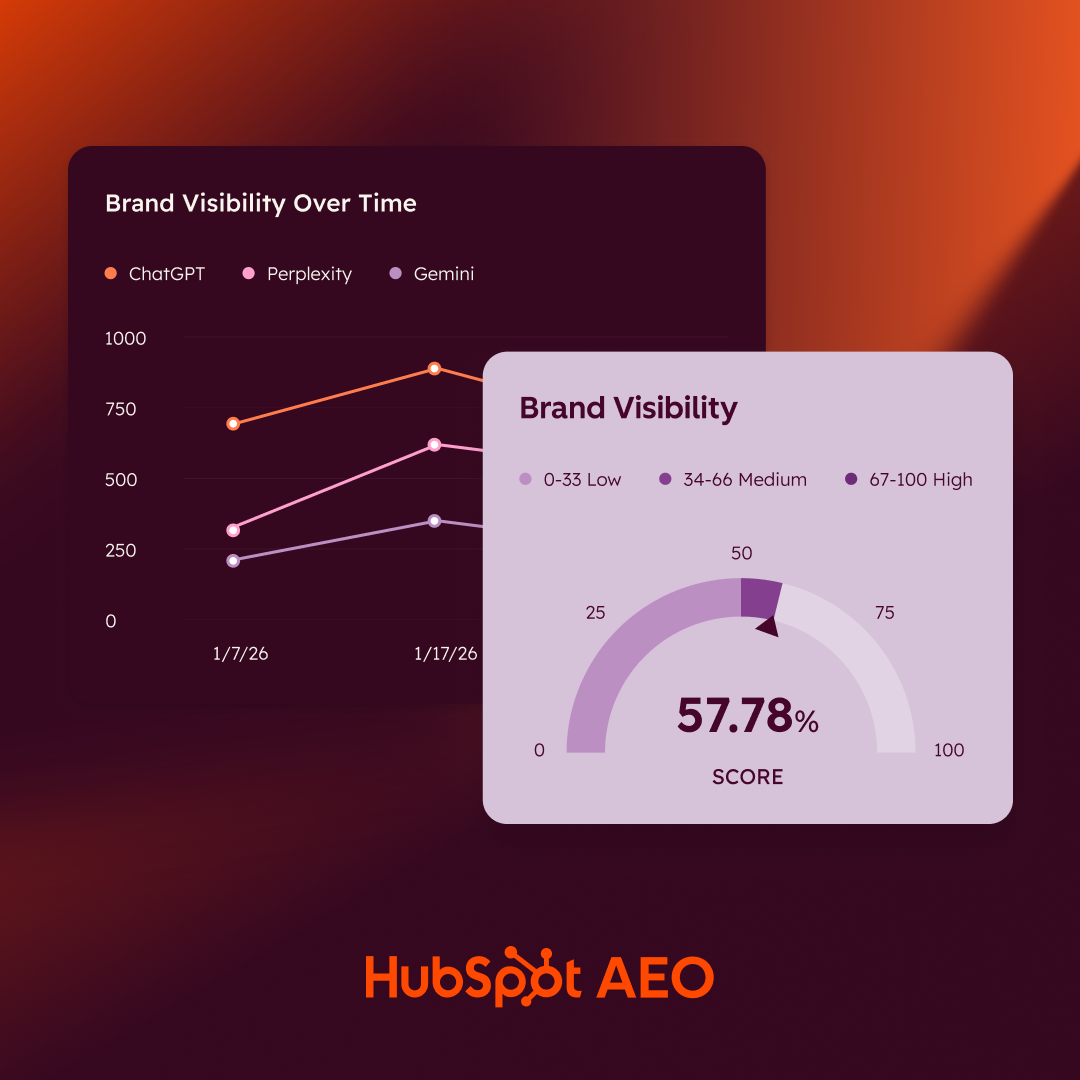
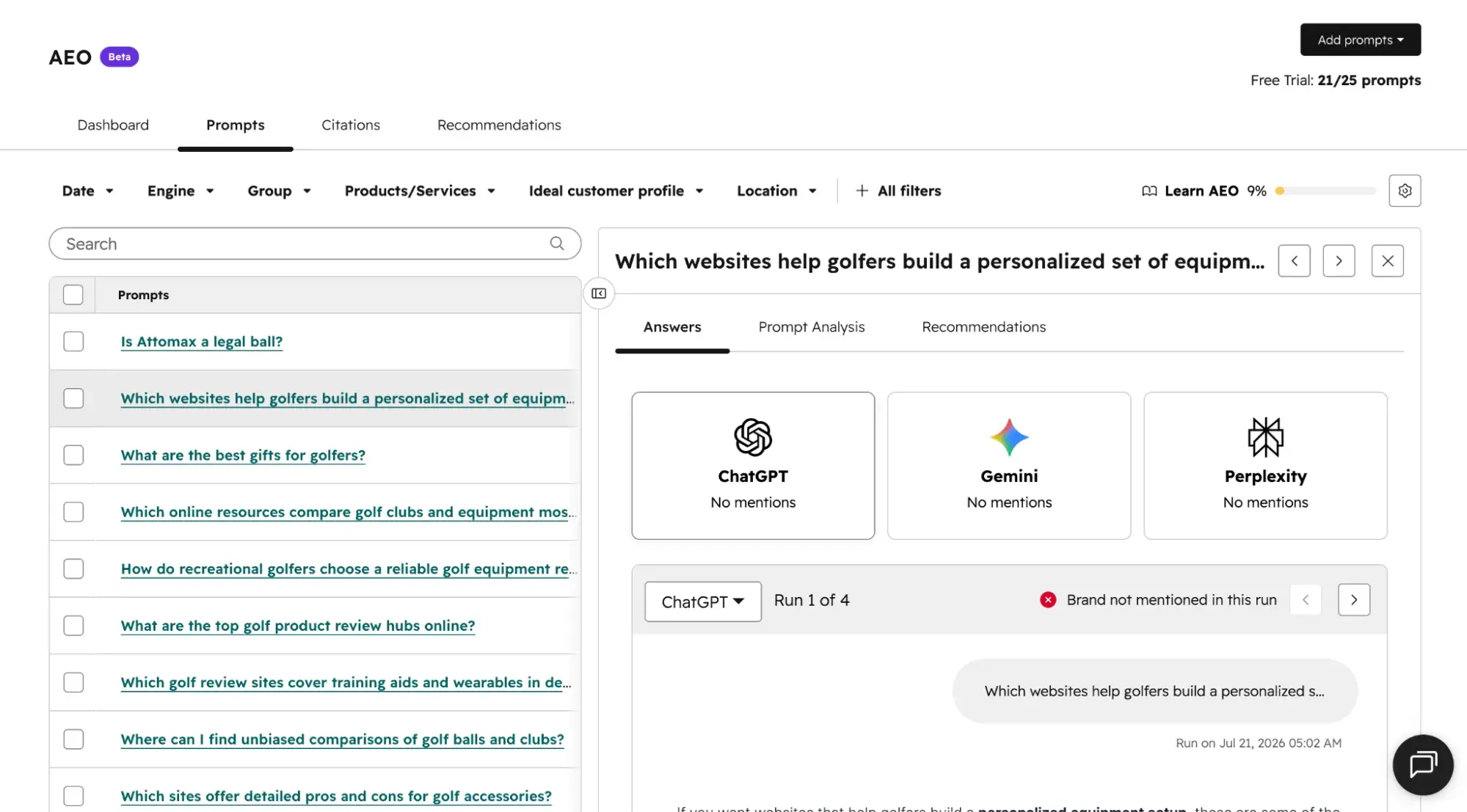
HubSpot AEO users can get a sense for how their brand mentions are doing by going to the Dashboard tab and viewing the brand visibility score to see how often their brand is mentioned for tracked prompts, and brand visibility over time to track progress. For more granular data, they can go to the Prompt tabs and click on each individual prompt to see if their brand was mentioned in that answer and on which of the three answer engines it was mentioned.
How Semrush AI Visibility Toolkit Tracks Prompts, Citations, and Brand Mentions
Semrush differs from HubSpot AEO in the way it fetches answers. Instead of sending the prompts live to every answer engine every time, it has a pre-existing proprietary database of over 289 million prompts that it pulls from. The prompt database is updated daily.
Users can manually add prompts or use the synthetic prompts that Semrush suggests based on the user’s submitted domain and location. If a user manually adds prompts for tracking, then Semrush runs it live to see what answers get fetched.
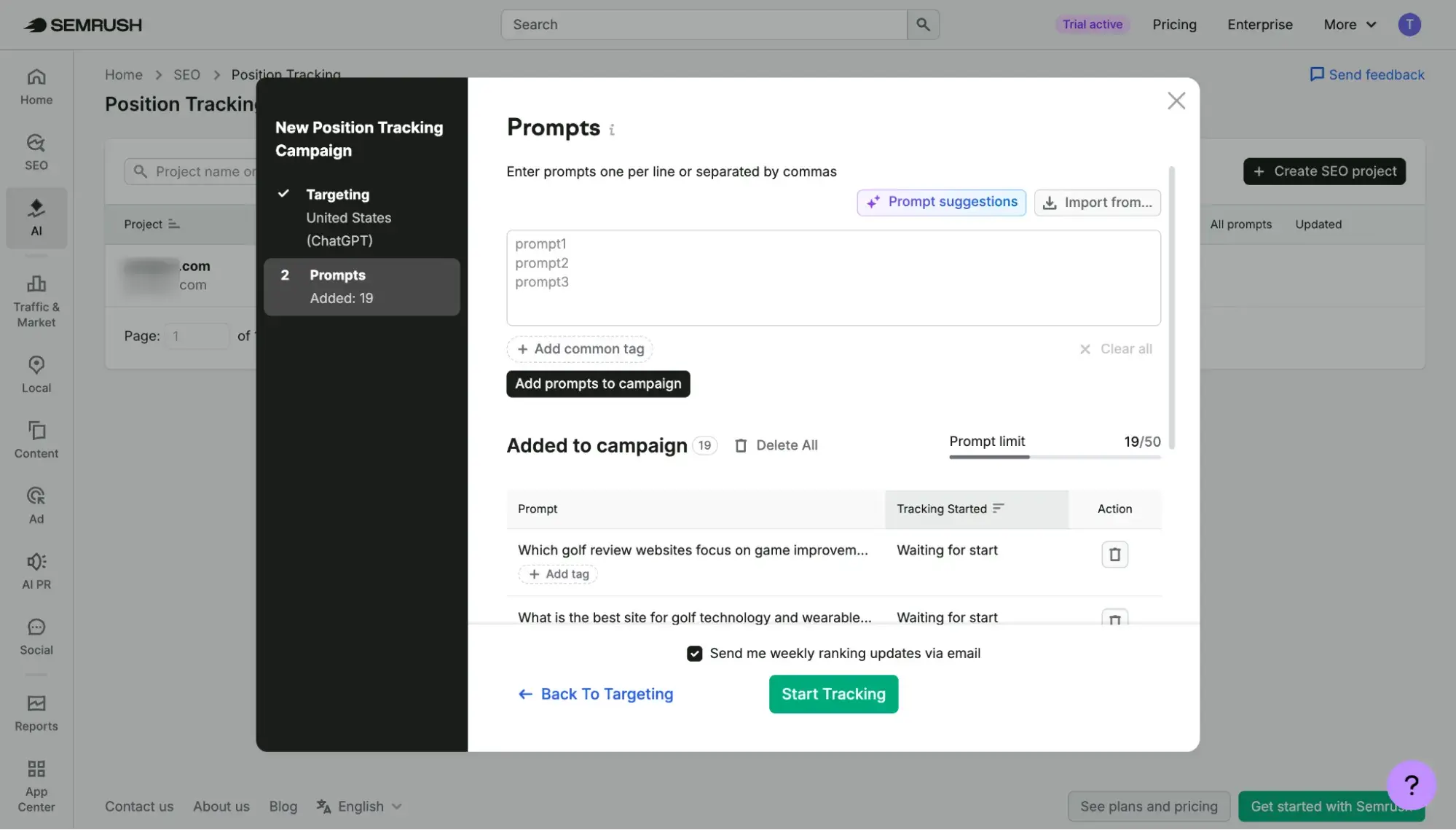
Unlike AEO in HubSpot Marketing Hub Pro+, Semrush AI Visibility Toolkit does not have a CRM, so it cannot use your business context to personalize prompts like HubSpot can.
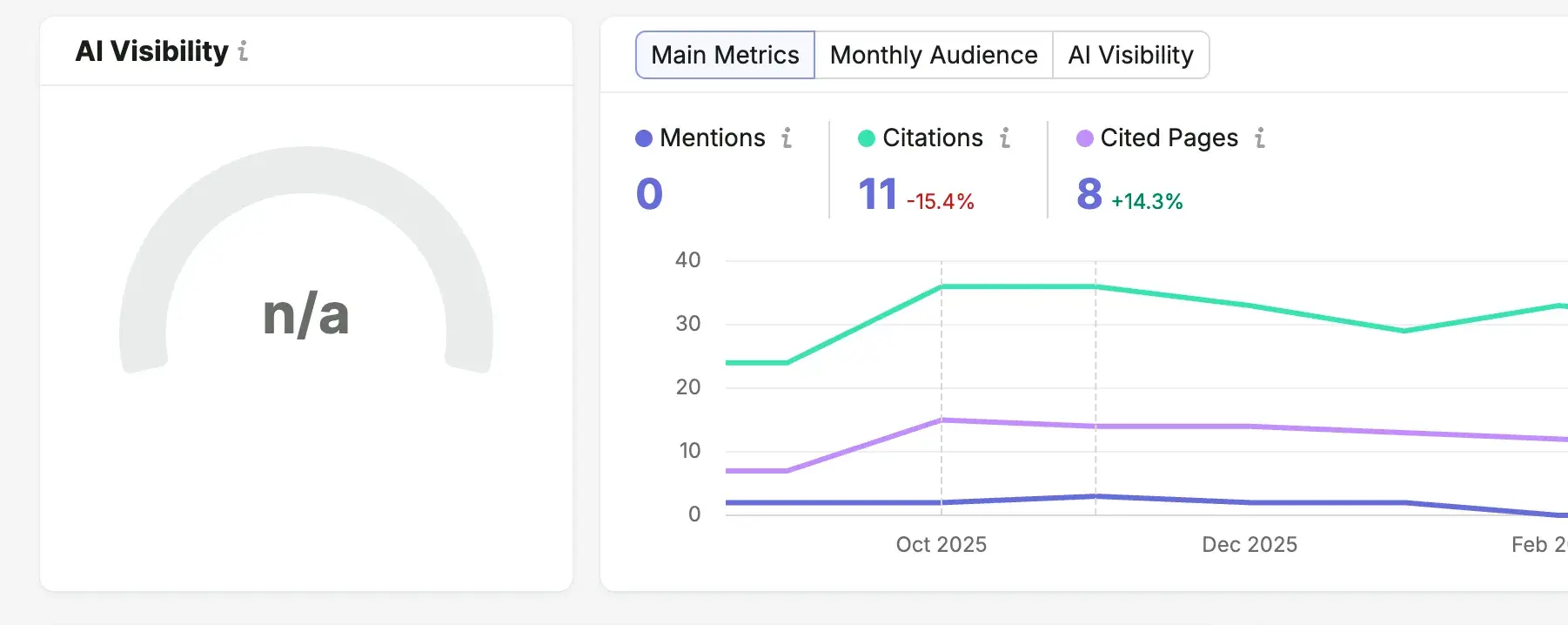
I found it confusing to try to locate my brand’s citations within Semrush’s AI Visibility dashboard. Instead of a dedicated Citations tab, Semrush has a few places where you can find info on how often AI cites your domain. Users can find it under AI Visibility > Visibility Overview > Citations, which shows how many AI answers a domain gets cited in. Scroll down to Cited Pages, and you can see the exact URLs on your website that are getting cited by AI.
Under AI Visibility > Competitor Research > Sources > Missing, you can see which third-party websites are driving your competitors’ AI visibility. These are opportunities for outreach to gain inclusion on those third-party sites.
HubSpot AEO Tool
- Track AI mentions.
- Analyze citations
- Monitor prompts
- Benchmark competitors
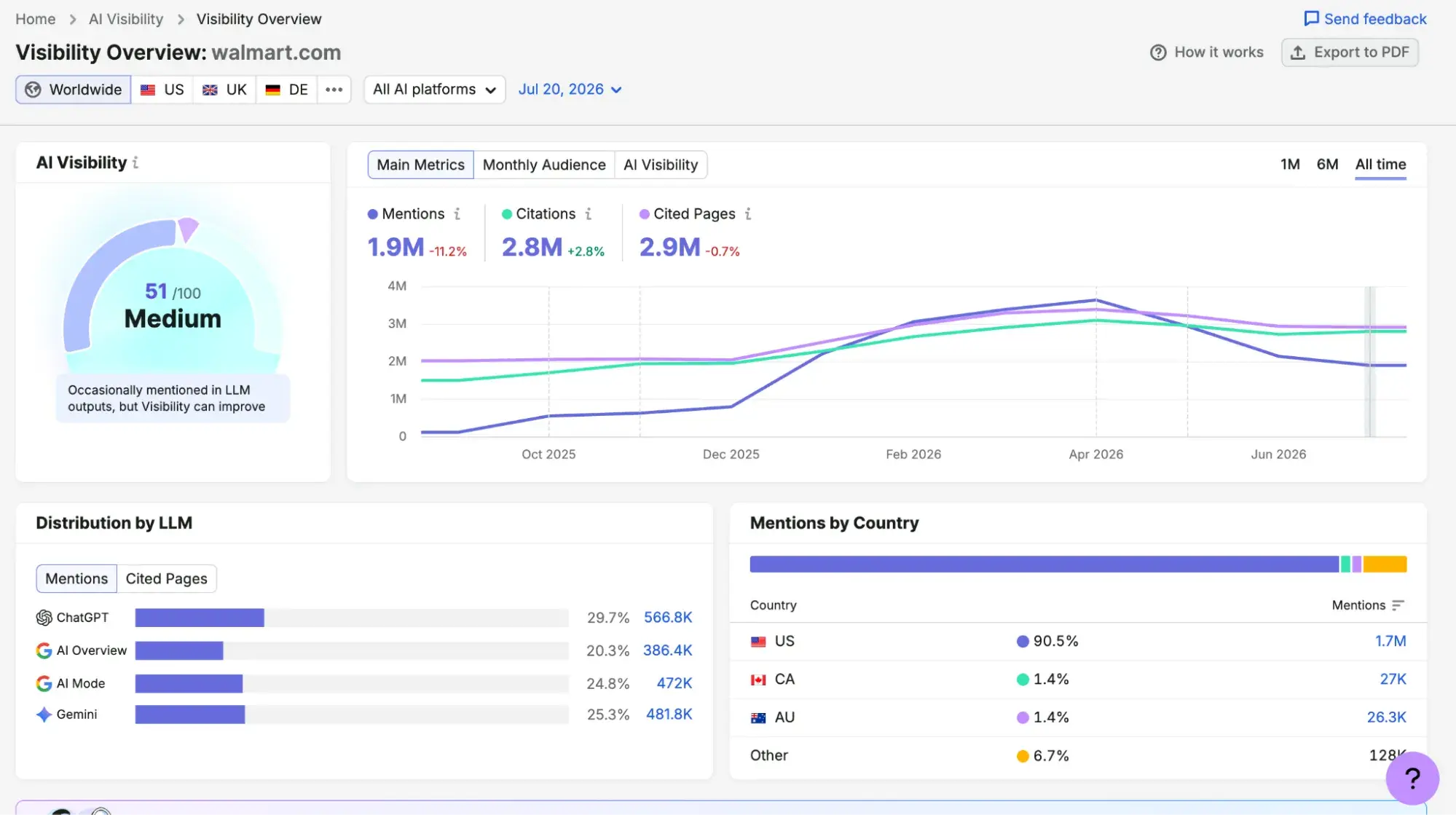
Semrush users can go to AI Visibility > Visibility Overview and see their AI visibility score next to how mention counts are trending over time. On the same page, brand mentions are broken down by LLM distribution, country, topic, and prompt.
HubSpot AEO vs. Semrush AI Visibility: Actionability
Winner: HubSpot For Content Creation, Semrush For Technical Optimization
This section covers how easy it is to take action on AEO insights provided by HubSpot AEO vs Semrush AI Visibility.
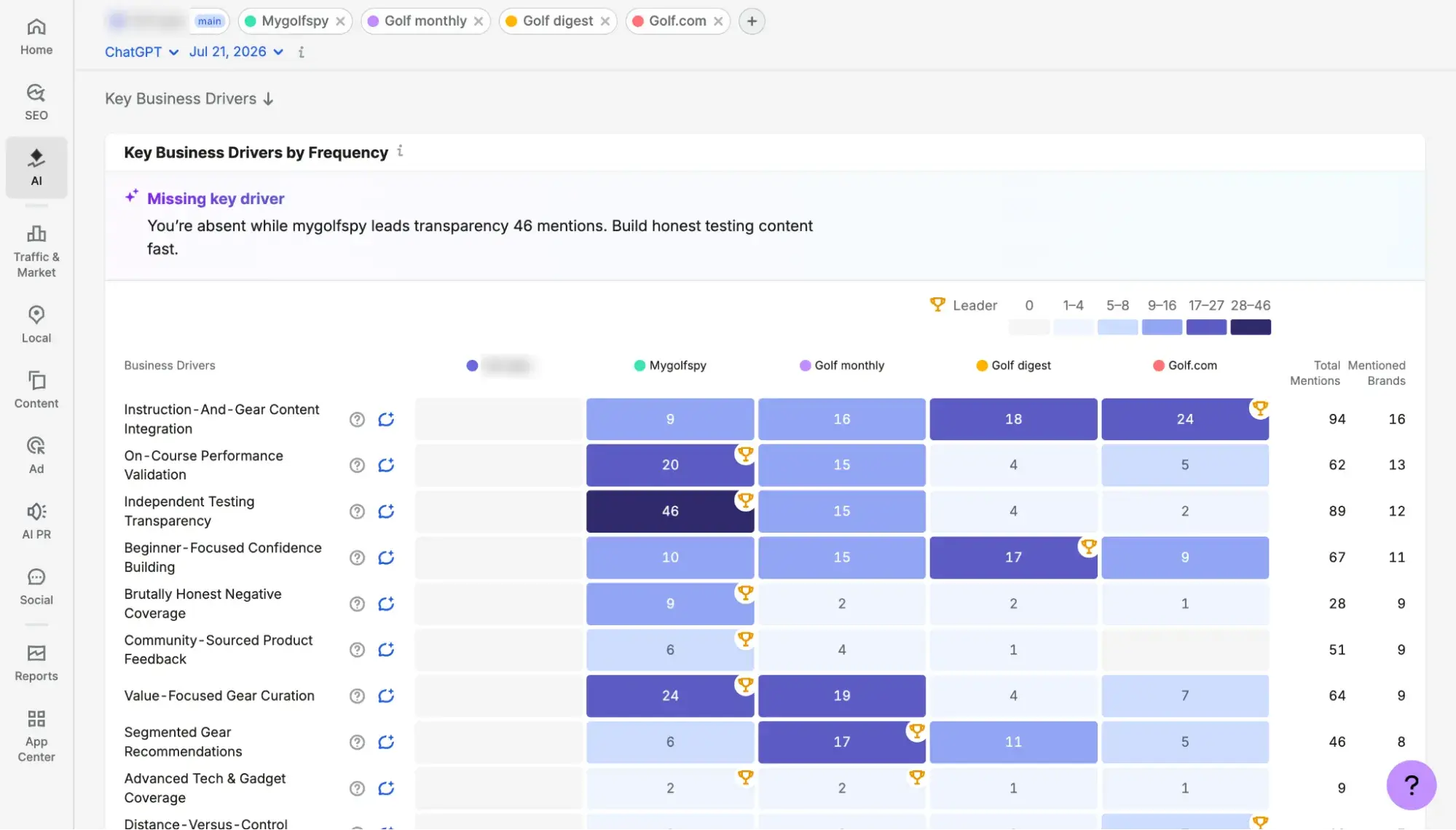
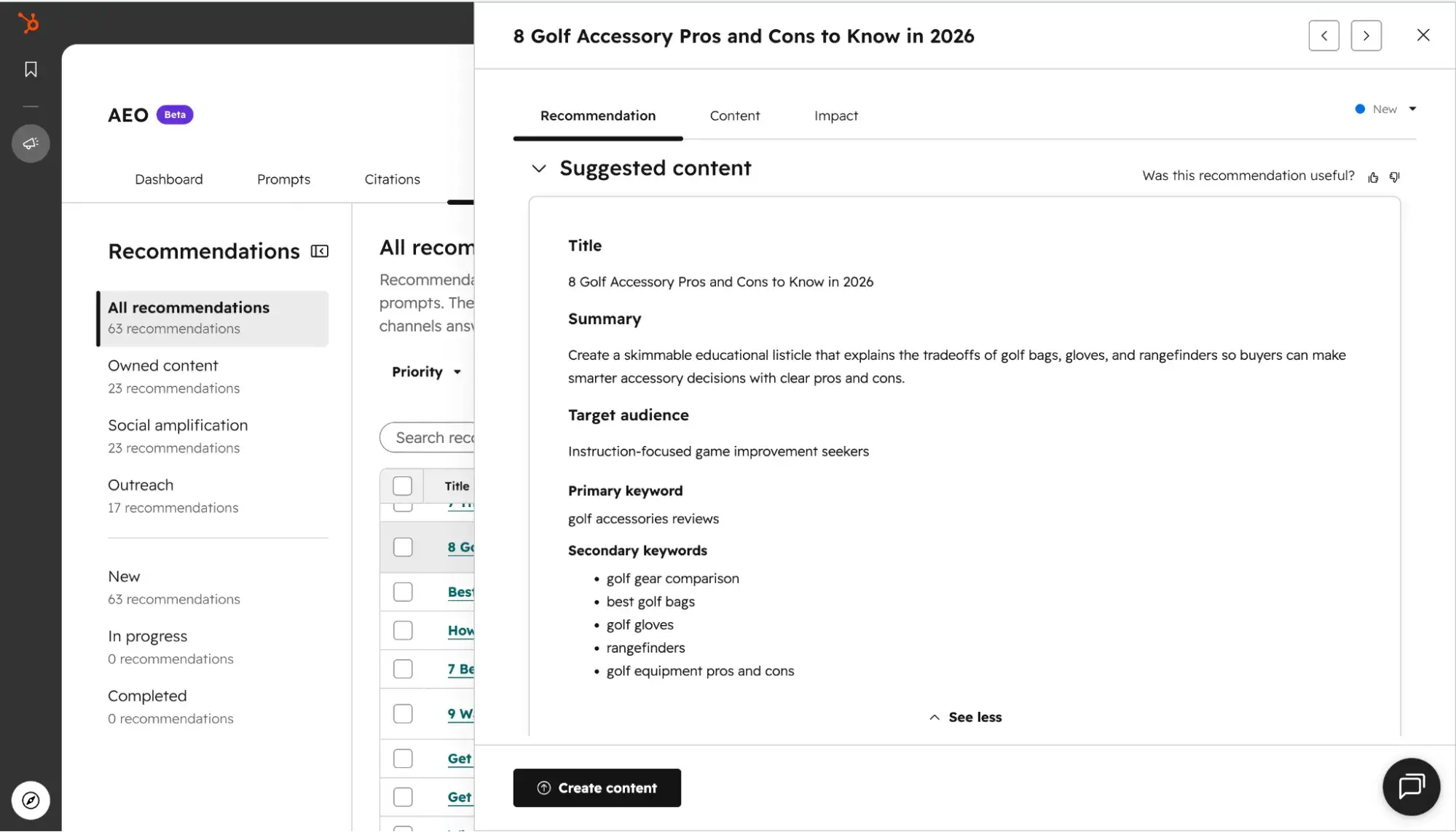
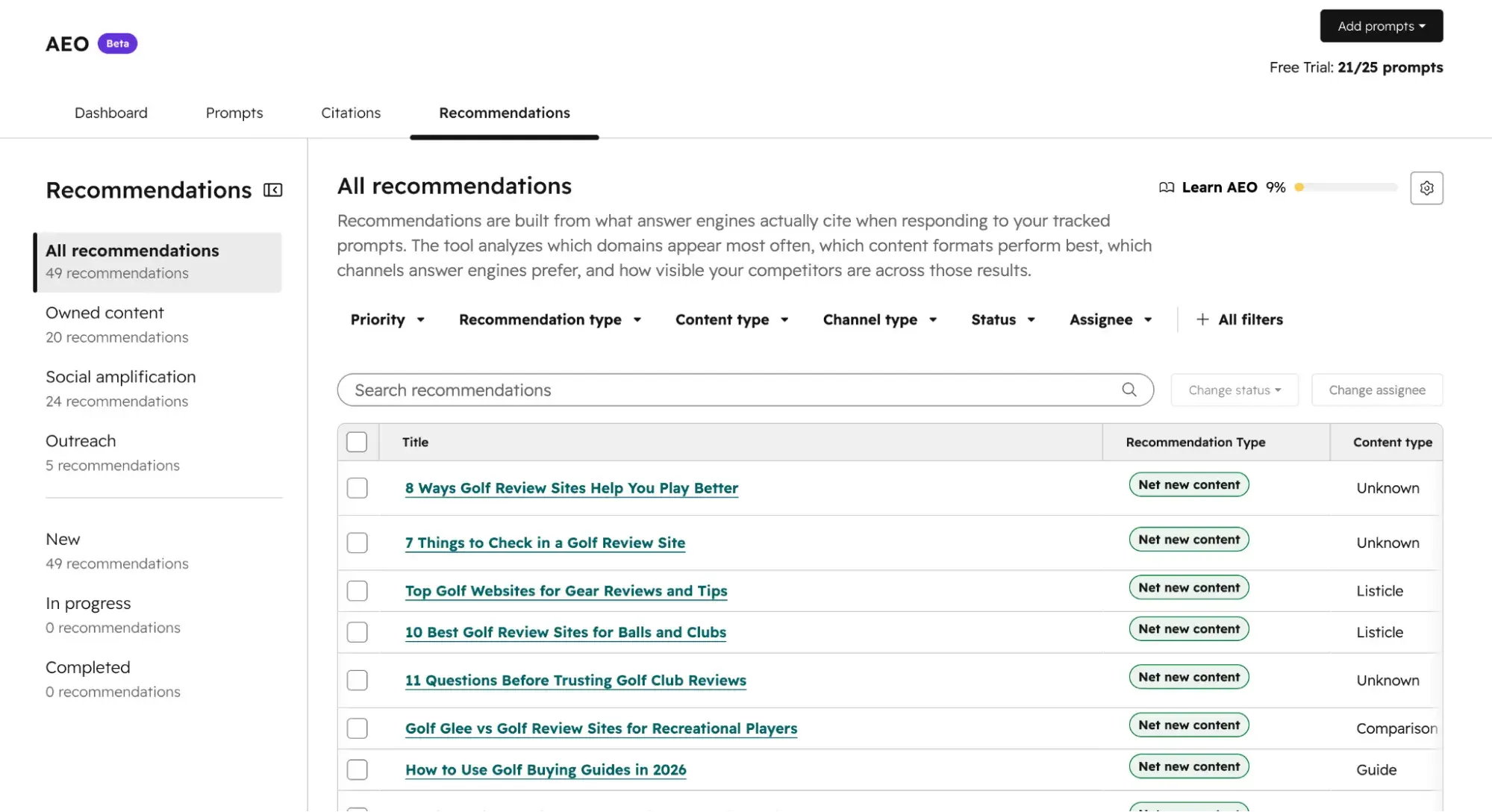
Both tools provide recommendations tailored to your brand, based on what answer engines are already saying about it. However, they differ in their level of detail. HubSpot AEO provides prescriptive recommendations on blog posts you should create, providing a brief with a suggested title, target audience, summary, and primary and secondary keywords.
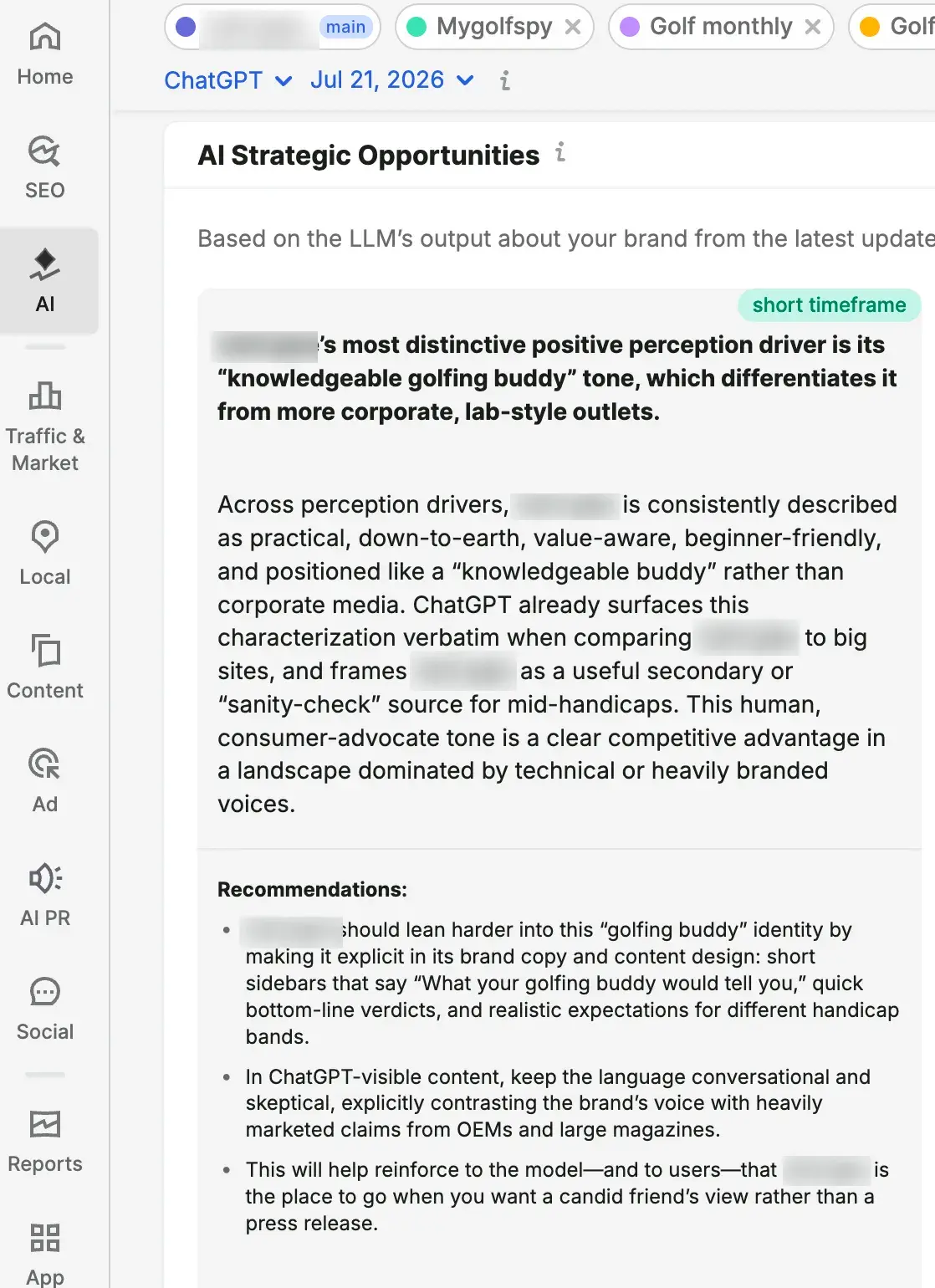
Semrush provides more high-level directional guidance, such as adjusting your brand voice or adding certain content design elements. It doesn’t give detailed guidance on actual blog posts to create — at least, not within its AI Visibility Toolkit. You might have to purchase the Content Toolkit add-on for that.
Unlike HubSpot, Semrush doesn’t have a CMS or a CRM, so it lacks the unified path from insight to action that HubSpot has. Moving from suggestion to implementation will be more of a hassle, as you’ll need a separate tool for publishing. To get from insight to content creation with HubSpot, you’ll need Marketing Hub Pro/Enterprise (which includes AEO features and a CRM) or HubSpot for Marketers (which includes AEO features, a CRM, and a CMS). To create content with Semrush, you’ll need the Content Toolkit add-on.
As for technical optimization, both tools will alert you to AI-specific technical issues, such as a robots.txt file blocking an AI crawler. However, Semrush provides a dedicated AI Search Health score within its deeper, traditional Site Audit tool, making it stronger for overall technical SEO.
What is the fastest way to turn visibility gaps into content updates?
The fastest way to turn visibility gaps into content updates is to use HubSpot for Marketers, which combines Marketing Hub, Content Hub, and AEO to help you create answer engine-friendly content fast based on your actual CRM data. Subscribers to HubSpot for Marketers or Marketing Hub Professional/Enterprise can use Content Agent to generate research-backed blog posts based on AEO recommendations.
When should you use AI to accelerate AEO tasks?
本条目归入「Brand Marketing」垂直,涉及真实话题:品牌营销、人工智能。
· 市场:关注 品牌营销、人工智能 对相关品类与竞争格局的潜在影响。
· 消费者:谷歌 Google 的受众行为与偏好变化值得追踪。
· 品牌:谷歌 Google 的叙事、产品与增长动作可拆解复用。
· 渠道:内容分发与触点组合(社媒 / 电商 / 线下)的协同值得复盘。
· 涉及品牌:谷歌 Google。
· 核心话题:品牌营销、人工智能。
· 可思考:如何把「品牌营销」的洞察,转化为可衡量的内容与增长动作?
面试中可引用「HubSpot AEO vs. Semrush AI Visibility: Which is right for your team?」:围绕 谷歌 Google,说明你对行业动向的判断与可落地动作。
本条目相关英文术语可在「商务英语」模块按话题检索,用于外企面试表达训练。
See exactly where your brand shows up in answer engines and take action to close AI visibility gaps.…
If you’re comparing HubSpot AEO vs Semrush AI Visibility Toolkit, I tested both for you as a marketing and AEO practitioner myself and will share my detailed review.…
See exactly where your brand shows up in answer engines and take action to close AI visibility gaps.…