Smartphone school ban could imperil billions in social media ad revenue
While hypothetical, a ban is just one aspect of the rapidly changing regulatory landscape of teen social media use.
本条来自 Marketing Dive(Marketing / 资讯),聚焦 brand、consumer。 Let Marketing Dive's free newsletter keep you informed, straight from your inbox.
While hypothetical, a ban is just one aspect of the rapidly changing regulatory landscape of teen social media use
- You're all set
- Let Marketing Dive's free newsletter keep you informed, straight from your inbox
While hypothetical, a ban is just one aspect of the rapidly changing regulatory landscape of teen social media use
Let Marketing Dive's free newsletter keep you informed, straight from your inbox.
If a national ban were enacted, Snapchat would see ad revenue decline 6%, while TikTok could see a $1.26 billion drop.
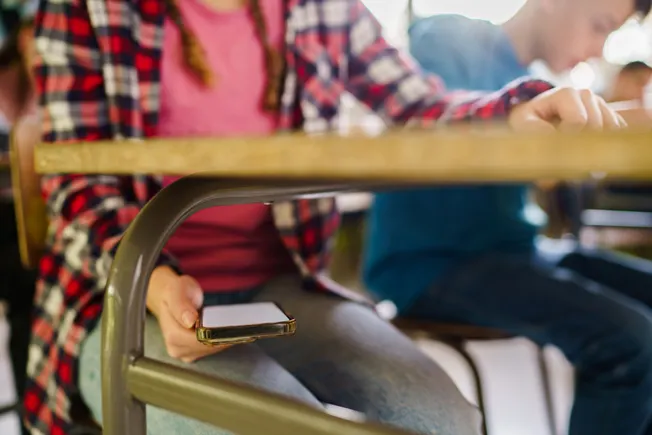
Most states have already passed some sort of restriction of cellphone use in classrooms, to varying degrees of success . Enforcement has proven tricky, and the full impact of these bans on marketers has yet to be determined. However, the majority, 74%, of U.S. adults support banning phones during class, per Pew Research cited by Emarketer.
Teen social media users are a key demographic for many marketers, and with 19 million users between the ages of 12 and 19, any changes in social media usage can impact the ad revenues of social media platforms, per Emarketer’s “How A Nationwide Classroom Cell Phone Ban Would Affect Social Network Use.”
Phone bans, and social media bans for teens in general , have gained traction in recent months. To date, a national ban on smartphones is not under consideration, although the regulatory environment around smartphone use and social media use is heating up quickly. The backlash against tech firms for widely held beliefs about how social media platforms have impacted young users has also swiftly gained traction. Just this week, a U.S. appeals court allowed thousands of social media addiction cases against companies such as Meta and Snap to move forward.
The concern for marketers isn’t just the drop-off in usage time during school hours. Less time on social media during the day can cause teens to spend less time on apps overall, according to Minda Smiley, an Emarketer analyst.
"The reality is that these bans are expected to reduce overall social media usage among students over time. They could also have a domino effect that further curbs their usage, as teens may become less reliant on social media as they grow more accustomed to phone-free spaces,” said Smiley in press materials.
Not all platforms would feel the impact of a ban equally. Snapchat would see the most drastic change in user behavior, largely due to teens using the app more like a messaging service than a social media network. Students routinely use it to communicate during the school day and that activity would be hard to make up elsewhere. This would equate to an estimated drop in ad revenue of 6%.
Meta, on the other hand, would see ad revenue for its apps impacted by less than 1%, amounting to a difference of $600 million.
It’s important to remember that these bans do not happen in a vacuum, per the report. They often occur alongside legislation at the national and state levels to regulate teen social media use.
Get the free daily newsletter read by industry experts
From a condiment collaboration with hip-hop producer Mustard to a Weinermobile race, Todd Kaplan tries to keep activations rooted in insights.
Ten-figure acquisitions, new agency experiments and organizational changes are underway, but the real key may be relinquishing a sense of control.
Subscribe to Marketing Dive for top news, trends & analysis
Sign up for the free newsletter.
Interested? Explore more of what has to offer.
You're all set
Thanks for signing up! Please keep an eye out for a confirmation email from [email protected] To ensure we make it into your inbox regularly, add us to your allow list, mark us as a safe sender, or add us to your address book. Check out more from
Get the free daily newsletter read by industry experts
E.l.f. Cosmetics/Oberland
Diverse representation continues to present a major opportunity for brands and could become even more of an expectation during the end-of-year period.
Already beleaguered CMOs are being forced to be more agile than ever in the face of a new round of challenges like trade wars and artificial intelligence.
The free newsletter covering the top industry headlines
本条目归入「Consumer Trends」垂直,涉及真实话题:brand、consumer。
· 市场:关注 brand、consumer 对相关品类与竞争格局的潜在影响。
· 消费者:受众行为与偏好变化值得追踪。
· 品牌:本动向对品牌资产建设的启示。
· 渠道:内容分发与触点组合(社媒 / 电商 / 线下)的协同值得复盘。
· 核心话题:brand、consumer。
· 可思考:如何把「brand」的洞察,转化为可衡量的内容与增长动作?
面试中可引用「Smartphone school ban could imperil billions in social media ad revenue」:围绕 brand、consumer,说明你对行业动向的判断与可落地动作。
本条目相关英文术语可在「商务英语」模块按话题检索,用于外企面试表达训练。
Diverse representation continues to present a major opportunity for brands and could become even more of an expectation during the end-of-year period.…
Let Marketing Dive's free newsletter keep you informed, straight from your inbox.…
If a national ban were enacted, Snapchat would see ad revenue decline 6%, while TikTok could see a $1.26 billion drop.…